
The ABCs of American Fire Marks: O Is for the Omaha Fire Insurance Company
History of the Omaha Fire Insurance Company of Omaha, Nebraska, 1889 to 1896, Bulau US-OA-1, and the questions raised by its receivership.
By The Old Underwriter
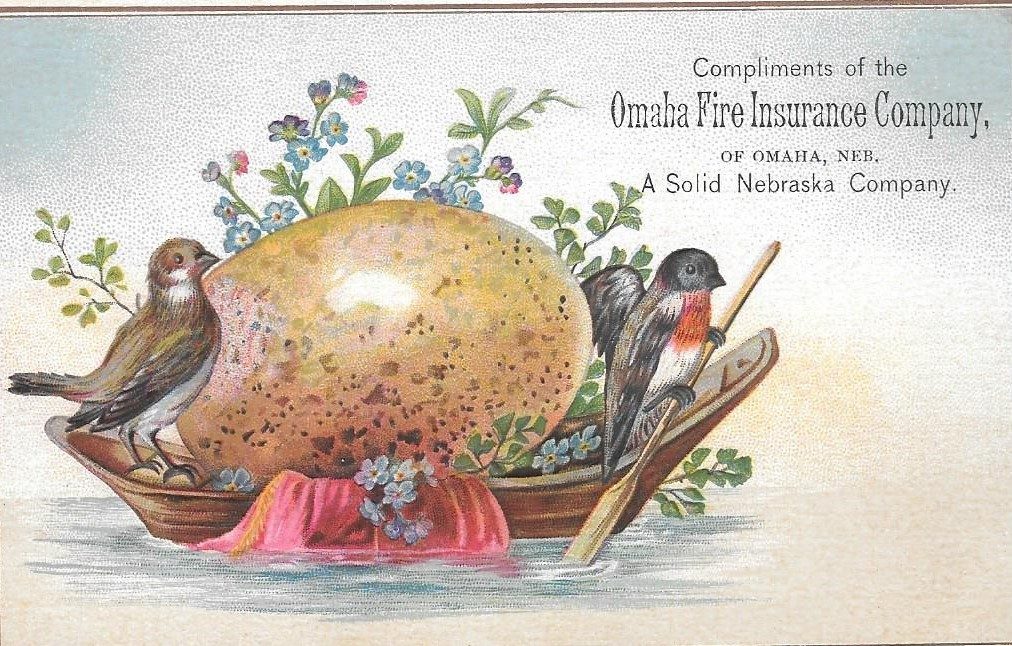
O is for the Omaha Fire Insurance Company, Omaha, Nebraska
1889 – 1896, Bulau US-OA-1
Organized by wealthy businessmen and backed by the banks, the Omaha Fire Insurance Company was incorporated on May 15, 1889, and commenced business the next day on May 16, 1889. Its authorized capital stock was $100,000 at $100 a share of which $50,000 was paid in cash and the other half in notes.
Unlike most other insurance companies of the period, I was unable to find any newspaper advertising, either by the company or its agents, from 1889 to 1896. The only reference to the company was either a court dispute or the occasional praise by a policyholder for payment of a minor claim.
It seems that the story of Omaha Fire Insurance Company doesn’t begin until its failure. It wasn’t until the company declared insolvency in February 1896 and a receiver was appointed, that revelations about the company surfaced. The court appointed receiver, Earl W. Gannett, was recommended by the failed insurer’s board of directors and was a director and stockholder of the failed company. Such an appointment of an insider seemed unusual considering the function of a receiver is to preserve the assets of the company and pay off the creditors of the failed insurer.
Rumors surfaced that the policyholders were not receiving full refund of their unearned premiums and were told by the receiver to go to other insurers for coverage. The new agent would cancel the old policy short rate and deduct their commission from the refund. The resultant premium, in most cases, would not cover the cost of the new policy. At that point, the State Auditor, Eugene Moore, stepped in and asked the court to allow him to intervene on behalf of the policyholders to require the receiver to reinsure the almost $2,000,000 worth of insurance with about $30,000 worth of unearned premium or return the full unearned premiums to the insureds. While the court denied the Auditor’s intervention on March 7, it did require the receiver to solicit bids for reinsurance of the existing policies.
By the end of 1896, the receiver had not asked for reinsurance bids and a judge directed the receiver to sue the stockholders for the $50,000 on their unpaid notes. Claiming that the assets were considerably less than liabilities, the creditors asked the court to replace receiver Gannett. On March 1897 Gannett was replaced by L. F. Crofoot. So worthless were some of the assets that at auction over $31,000 in notes were sold for $350. The new receiver pursued a more productive course and continued for years to go after stockholders for their unpaid notes. It seems that the directors, who ran the company into the ground, owned 71% of the stock.
After reviewing past annual statements from the Omaha Fire Insurance Company several items stand out. For example, in the first two years the company indicated that dividends were not paid to stockholders. Also, the payment of dividends was not shown in statements for the years 1891 through 1895. Why would businessmen invest in an insurance company that did not pay dividends? What did they get in return for the use of their capital?
Another example is the 12/31/1895 annual statement, which covers the year before the bankruptcy. The company reported that since organization the company received $657,000 in premium and paid $277,000 in losses. That’s very profitable for an insurance company. How come their surplus never came to at least $9,000 in any year? Also, what happened to the $66,000 reserve for reinsurance?
Lots of questions, with few answers.