
The ABCs of American Fire Marks: R Is for the Residence Fire Insurance Company, Cleveland, Ohio
History of the Residence Fire Insurance Company of Cleveland, Ohio (Bulau 444), from its 1873 charter to its 1877 reinsurance in a Glasgow company.
By The Old Underwriter
R is for the Residence Fire Insurance Company, Cleveland, Ohio
Bulau 444
The Residence Fire Insurance Company was chartered on August 8, 1873 and commenced business on December 17, 1873. Backed by $200,000 of paid in capital, the Residence Fire signed up agencies in Illinois, Iowa, Michigan, Ohio and Pennsylvania.
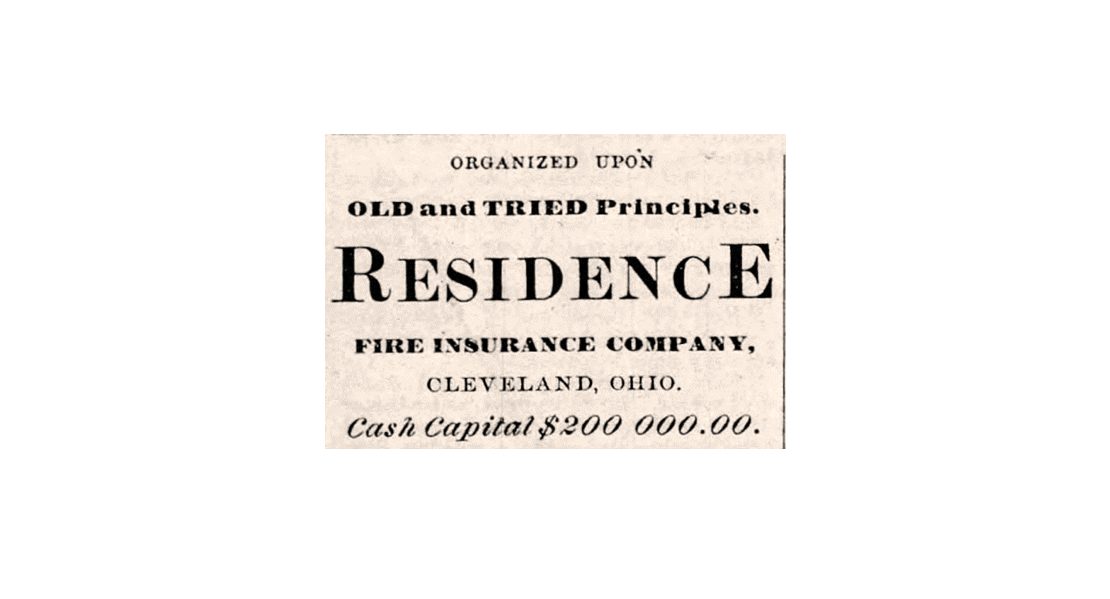
With the memories of the many insurance company failures from the Chicago and Boston fires still fresh, the Residence Fire’s advertising used a variation of the “Old and Tried” motto of the Glens Falls Insurance Company and stressed that they operated under “Old and Tried Principles.” That is, the $200,000 capital of the Residence Fire wouldn’t be subject to outside influences not contemplated by the policyholder. The Residence Fire only wrote fire and lightning and not windstorm or tornado. They did not provide any special policy forms, only basic insurance on farms and dwellings, and their contents. They did not write insurance on hazardous risks, risks in cities or transportation risks that were subject to losses caused by a ship sinking.
At a time when many mutual insurance companies were including premium notes as capital, the Residence Fire boasted its $200,000 cash capital provided security for claims. In addition, as a stock company, unlike a mutual, there were no assessments to policyholders should there not be enough to pay losses.
It was a sound plan, not subject to catastrophic loss, and effective advertising. However, dwelling and farm risks were an overall profitable class of business and competition was intensive and dominated by large Eastern and foreign insurers. After three full years of moderate success, its assets on December 31, 1876 were $245,500 with $10,400 added to surplus, but its premium growth was declining.
In May 1877 the Residence Fire Insurance Company retired and reinsured in the Scottish Commercial Fire & Life Insurance Company of Glasgow, Scotland.