Insurance Industry Badges
A survey of identification badges used in the insurance industry, grouped into seven types from employee inspectors to insurance fire patrols.
By Logan Smith
Last year I mentioned that while our organization has a few purists who choose to collect only fire marks, many of our members also collect what I call “peripherals”. I would define a “peripheral” as any insurance related item that is NOT a fire mark. Examples range from books to signs to letter openers to trade cards to currency and the list goes on and on! Some might ask, “Why spend time and treasure on peripherals when one could be developing a nice collection of only fire marks?” My answer is very simple…. because it is FUN! Many would also add, it is usually much cheaper.
Peripherals are a great avenue to contemporary history and are nice companion pieces to fire marks in one’s collection. They can offer additional information on a particular company or a particular time or event. In many cases, they take up much less space. All the above are true when one collects badges related to the insurance industry. Some readers know that in the early days of insurance some entities called a fire mark a “badge”. For the purpose of this article, the badges being referenced were utilized as identification and were worn or carried in a case or pocket much like badges of police officers or fire fighters. This article hopes to share the various uses of badges by insurers.
Types of Insurance Related Badges
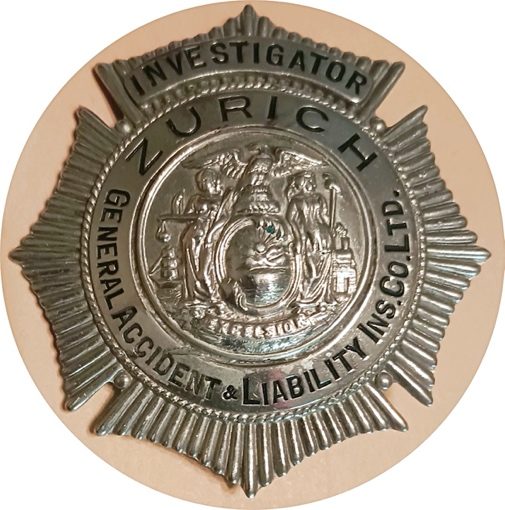
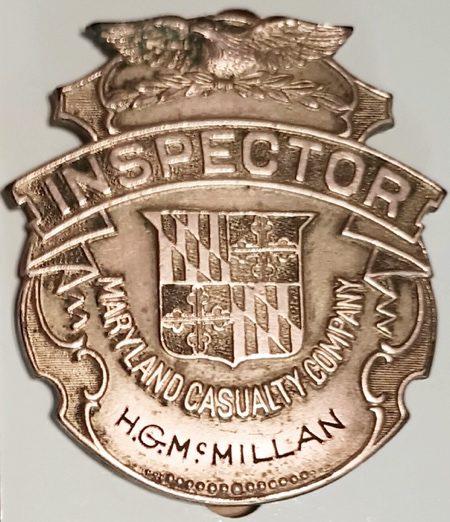
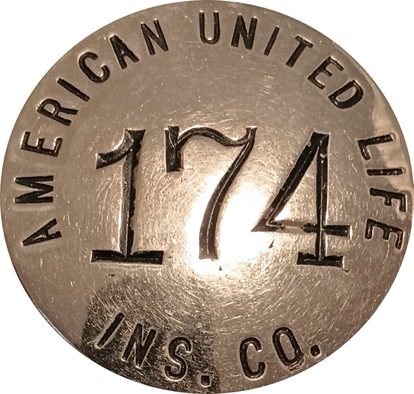
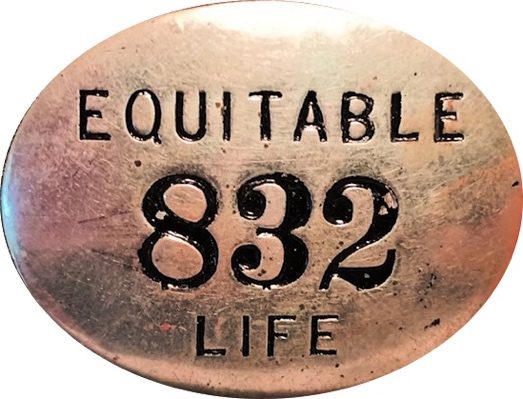
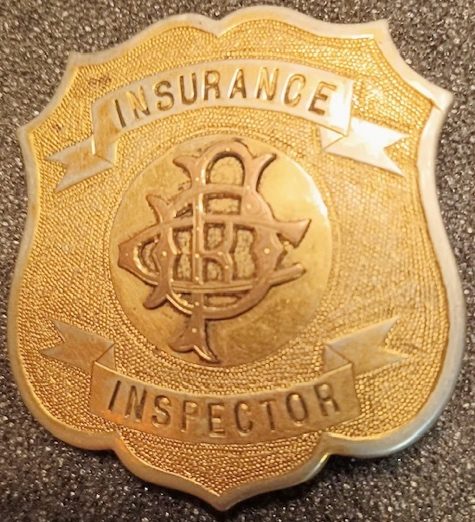
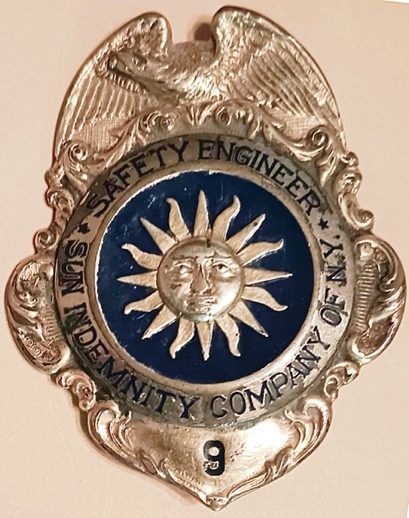
A) Special Purpose to Identify Company Employees – Often employees of an insurance company would have specific training and skills that would qualify them for special activities. A great example of this would be employees hired to carefully examine risks for insurability or inspectors who would review the condition and maintenance of boilers, furnaces, and other hardware. The badge and a business card with a photo were used to confirm their representation and authority.
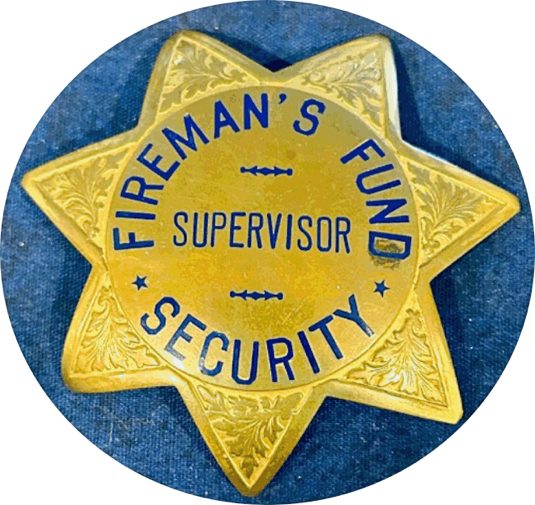
B) Company Security Force – Many companies had their own employed security personnel who kept buildings, assets, and employees safe. Others contracted with security companies to furnish these services. In most cases, the insurance company furnished badges to be used by these individuals and the badges usually identified the company.
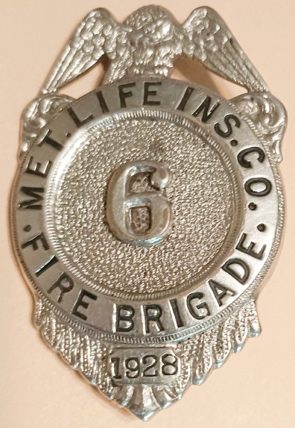
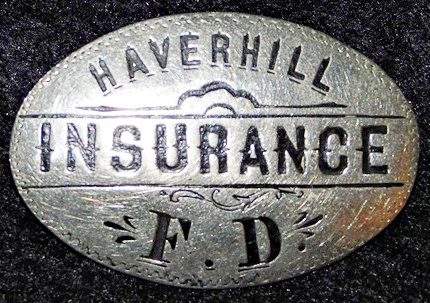
C) Company Fire Departments – While somewhat uncommon, there were some companies who had their own fire departments that were designed to protect buildings, assets, and employees. Badges would be issued to those specific employees for use when serving in that role.
D) Wartime Identification Badges – During World War II, many businesses and industries either were required or chose to issue employee identification badges for all or some of their employees. In some cases, the badges had the name and photo of the individual while other times only a company name and employee number were issued.
E) Fire Department Issued Fire Line Passes – In many major cities, the local fire departments would issue “Line Passes” to individuals. In some cases, they were given to dignitaries and elected officials and in other situations they were issued to insurance company employees who needed to access the fire scene (i.e., property loss adjusters). These badges were usually marked with the role of the bearer and included the name of the Fire Department.
F) Insurance Sponsored Fire Brigades – This was more common in Great Britain and has been addressed in great depth in the book, Badges of Extinction. Badges such as those shown in the book were very elaborate and are very challenging to acquire. They would have been worn by the fireman.
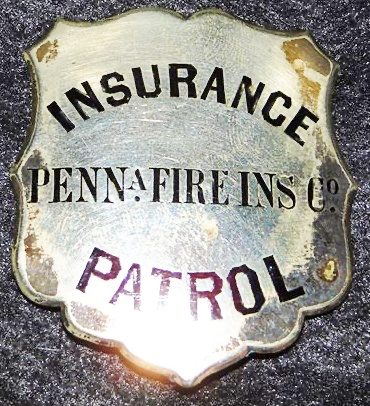
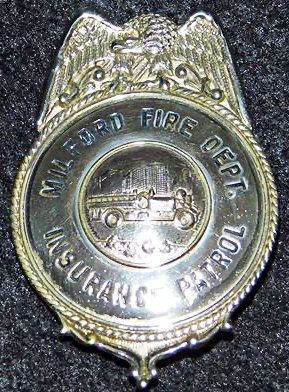
G) Fire Patrols – Some of the larger cities (and even some of the smaller burgs) had company sponsored Insurance Fire Patrol. Many times, multiple companies would contribute to their operation. These individuals were often travelling around their community looking for fires or potential fires. Oftentimes they would identify hazardous situations and offer potential remedies.
Photos used in this article were furnished by the author, Logan Smith, and member Scott Tippen.