
The ABCs of American Fire Marks: K Is for the Kenton Insurance Company
History of the Kenton Insurance Company of Covington, Kentucky, Bulau 411, from its 1860 charter as the City Fire and Marine to its 1891 retirement.
By The Old Underwriter
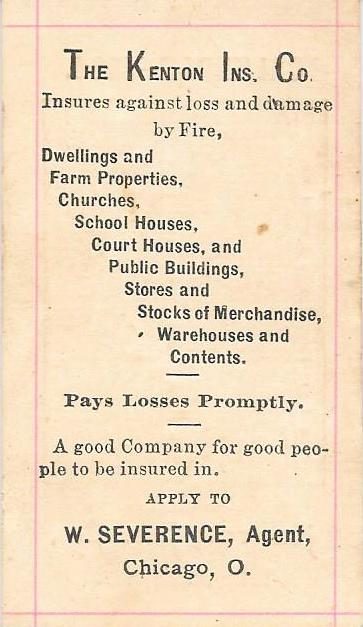
K is for the Kenton Insurance Company, Covington, Kentucky
Bulau 411
The Kenton was originally incorporated on February 22, 1860 as the City Fire and Marine Insurance Company with an authorized capital of $100,000. The fact that I could not find any mention of the City Fire and Marine Insurance Company doing business and the amended charter replaced the original incorporators with a new group, leads me to think that the original company’s capital was never subscribed to and the charter was dormant. New investors bought the charter and filed the amendments with the state and on February 13, 1867 the Kentucky General Assembly approved the City’s name change to the Kenton Insurance Company. The amended charter also reduced the shares from 5,000 to 2,000 and increased share price from $20 to $50 with only ten dollars in cash up front with the rest by notes.
Named after the American frontiersman, soldier and friend of Daniel Boone, Simon Kenton, and with $100,000 paid up capital, the well-connected businessmen of Kenton began to write fire insurance as well as marine insurance on barges, ferries and cargo. Writing insurance in at least nine states, the Kenton was successful in business, paid good dividends and grew its assets. By September 1874 their assets were $300,000 and its capital was increased to $150,000 in 1877 and to $200,000 in 1879.
Below are some of the financials cited in its annual report to the various state insurance departments for the year ending 12/31/1889:
Premiums since organization…… $2,202,277
Losses paid since organization……. 1,291,444
Cash dividends since organization... 215,352
Stock dividends since organization... 75,000
Losses incurred 1889……... 37,460
Although profitable and in sound financial condition, management determined that the competition from the larger Eastern insurance companies was too great and retired in early 1891, and then reinsured in the National Fire Insurance Company, Hartford.