
The ABCs of American Fire Marks: U Is for the United Life, Fire and Marine Insurance Company
History of the United Life, Fire and Marine Insurance Company of Covington, Kentucky, Bulau 386, a wild-cat insurer chartered in 1865 that failed by 1869.
By The Old Underwriter
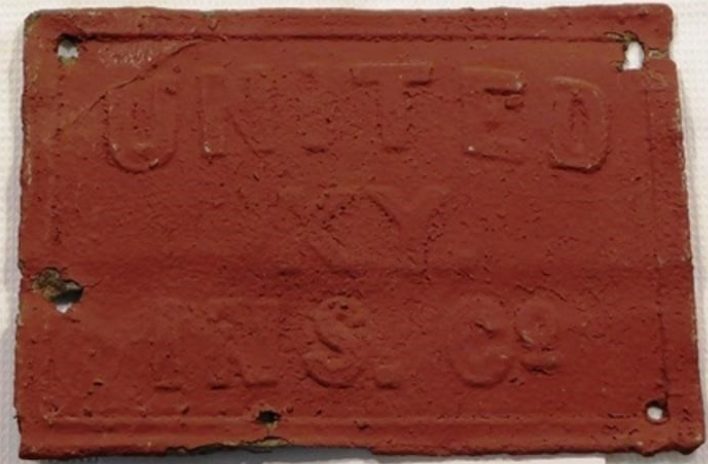
U is for the United Life, Fire and Marine Insurance Company, Covington, Kentucky; Bulau 386
The United Life, Fire and Marine Insurance Company was incorporated on February 24, 1865 and was authorized to raise $300,000 capital stock with an option to later increase it to $800,000. The stock was valued at $25 a share with payment of $5 and the remainder in secured notes. Over its short life span, besides Kentucky, the company operated in Indiana, Kansas, Missouri, and Ohio. Numerous newspaper articles in these states incorrectly quoted their name as United Fire and Marine Company.
On January 29, 1867, the charter was revised with one noteworthy change. Similar to the authority found in the most flagrant wild-cat companies, the President and two other directors were in charge of a standing committee that had full authority to conduct business. In addition, this small group presided over elections to the board. Also, from 1867 the annual meetings of the Board of Directors were held in Cincinnati, Ohio even though the company was chartered in Covington, Kentucky.
Over the years the financial reports of the United Life were always sketchy. In fact, the Ohio Insurance Department in December 1867 revoked its license for not allowing the Department to examine its books. Early advertising listed “Charted Capital” or, sometimes, “Capital” as $800,000. Depending on the advertising provided by agents in the various states, the capital also varied from $350,000 to $500,000, paid up and secure. Very little could be ascertained from the financial reports that were filed with state auditors at the time. For example, the January 1, 1867 balance sheet submitted to Kansas showed total assets as $386,984.96 with total liabilities of only $1,337.25. These assets do not substantiate a $500,000, let alone a $800,000 capitalization. As you can see, state regulation at the time was extremely limited.
United Life’s balance sheet for 12/1/1868 filed in Kentucky listed assets of only $97,648 of which $44,660 consisted of common stock notes. Liabilities were listed as $160,372 of which only $132,750 was common stock. The listing of $66,204 as liabilities over assets made no sense. Even this statement shows that the assets, which were overinflated, were less than its capital. Note that the capital is nowhere near the amounts claimed earlier.
A January 16, 1869, Senate report of the Kentucky legislature that investigated insurance companies in the state, reported that the United Life, Fire and Marine Insurance Company had already failed and disappeared when the companies were reviewed. The report noted that other states did not accept stock notes for capitalization as they were usually not bonded and provided no security to policyholders. Insurance policies from companies that capitalized with capital notes were no better that a lottery ticket. The report also recommended that Kentucky institute a professional insurance department to supervise the insurance industry.
The United Life, Fire and Marine Insurance Company is another example of a wild-cat insurer that was bred before the days of effective state regulation of the insurance industry.