Fire Mark, Folk Art, or Something Else?
Examines a hand-carved pine plaque reading "Insured" found on eBay by Logan Smith and weighs whether it is a fire mark or folk art.
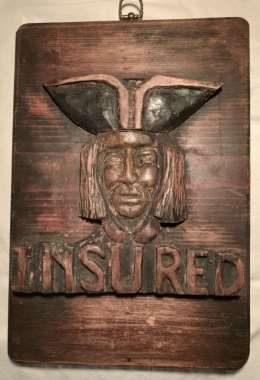
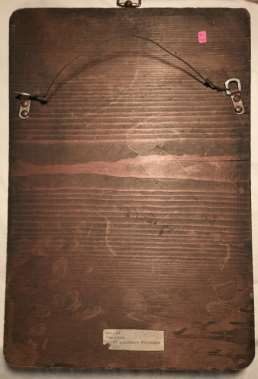
This is FMCA member Logan Smith’s most recent eBay find. For context the measurements of the solid pine backboard are 10.75 inches X 15.5 inches. The man or soldier and “insured” are hand carved and attached with nails to the backboard in multiple pieces. On the back is a sticker with Oct. 62 on it. This may have been the date it was acquired or maybe the date it was completed. So, after looking at this plaque, it begs the question: “Is this a fire mark?”.
As we know the purpose of a fire mark was not only to indicate a building was insured by a specific insurance company or agency against loss by fire but also as a method of advertising for the company or agency. This plaque certainly would be the size of a fire mark that would be placed on a building but there are no mounting holes, only some hardware attached so it could be mounted on a wall. It does clearly state “insured” but can we conclude it is for fire? Secondly, it bears no company name or reference to a company other than the carved “continental” soldier. Not all fire marks distinctly indicated the name of the company though. Just look at B.149, the fire mark for Penn Insurance Company of Pittsburgh. That cast iron mark depicts William Penn with just the word “Insured” below like the carving on Logan’s plaque.
There are some other clues that may help, mainly related to the materials used. While we know of many marks that had a wood backboard there are not really any marks made completely out of wood other than B.150, which is attributed to the Insurance Company of Florida. I would think if a company intended to issue a good number of fire marks hand carving them would be time prohibitive. Another clue is the nails used to attach the relief to the backboard. They appear to be round nails and don’t seem to puncture through the backboard. Finally, you would expect wood to age significantly with exposure to the elements. This plaque doesn’t look like a mark that has been exposed to the elements for over 100 years. (See the photo of the Green Tree mark on pg. 6 for comparison)
One thought is that it could possibly be a hand-made plaque imitating a fire mark in an attempt to resist the urge of would-be arsons. I think the issue once again is lack of mounting holes that would enable it to be mounted to the outside of a house. My guess is that it is a piece of folk art. Someone that was passionate about fire marks decided to make their own hand carved version to display inside their home. It obviously took quite some time to carve and put together with some nice quality wood. If anyone knows who made this and why Logan would love to know. Feel free to share your thoughts!